Shower and wet-area waterproofing, Etobicoke and Toronto.
The part nobody sees, and the only part that decides whether the room is still fine in ten years.
Send a few photos and the rough size — you get a written price the same day. No site visit, no sales call.
What's included
Everything in the quote, listed.
Written out so nothing appears as an extra later. If something on your job falls outside this, it is named in the quote — not discovered on the invoice.
- Substrate checked, made flat and made rigid before anything is applied
- Cement board or foam board to wet walls
- Membrane to the shower walls, the shower floor and the bathroom floor
- Reinforcing band into every internal and external corner
- Collars to every pipe and valve penetration
- Membrane bonded to the drain flange
- Flood test where the design allows one
- Flexible sealant, not grout, at every change of plane
How it is done
The parts of the job you will never see again.
Once the tile is down, every quote looks the same. This is what separates them while the floor is still open.
- 01
Showers fail at the joints, never in the middle
Nobody has ever had water come through the flat middle of a waterproofed wall. It comes through the corner where two sheets meet, the gap around the mixer, and the joint between membrane and drain. So those three details are where the time goes.
- 02
Bands and collars at every corner and penetration
Internal corners get a preformed or banded corner bedded into the membrane. Every pipe and valve gets a collar. These are the components that turn a coating into a sealed envelope.
- 03
Bonded to the drain, not run up to it
The membrane is clamped or bonded into the drain flange so there is a continuous path for water into the drain. A membrane that simply stops near the drain sends water under the tile bed instead.
- 04
Tile is never the waterproofing
Tile and grout are not waterproof and were never meant to be — grout is a filler and it lets water through. The membrane behind is what protects the building; the tile is the surface you look at.
- 05
Flood-tested before tile where the design allows
A shower floor with a drain that can be plugged is flooded and left. That is the last moment the answer is cheap.
- 06
Movement joints in sealant, not grout
Wall-to-floor and internal corners move. Filled with grout they crack within a year, and a crack in a shower corner is a direct route behind the tile. They are filled with a flexible sealant matched to the grout colour.
From his jobs
-
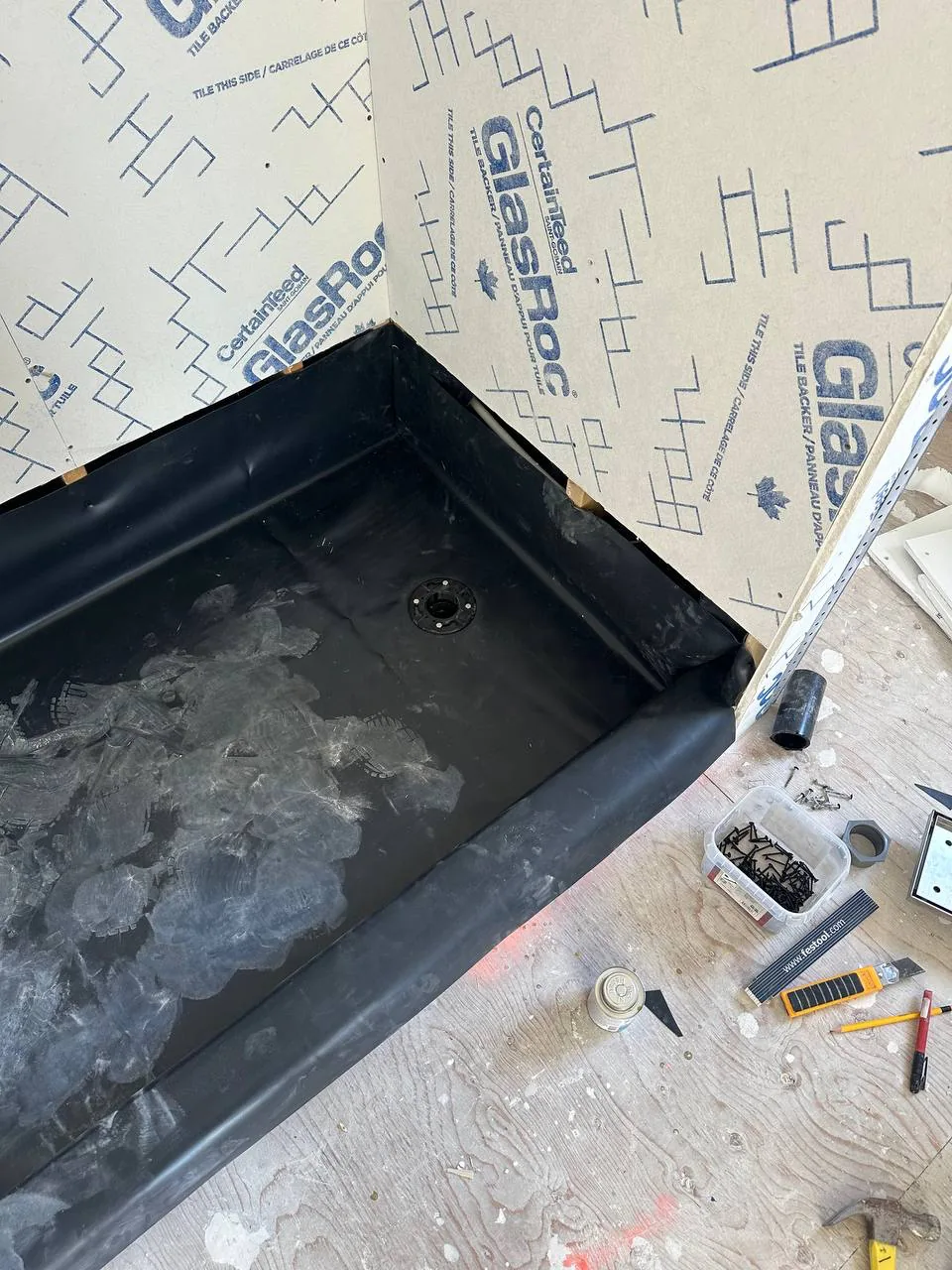
Pan liner corners folded, never cut — a cut corner is a seam -
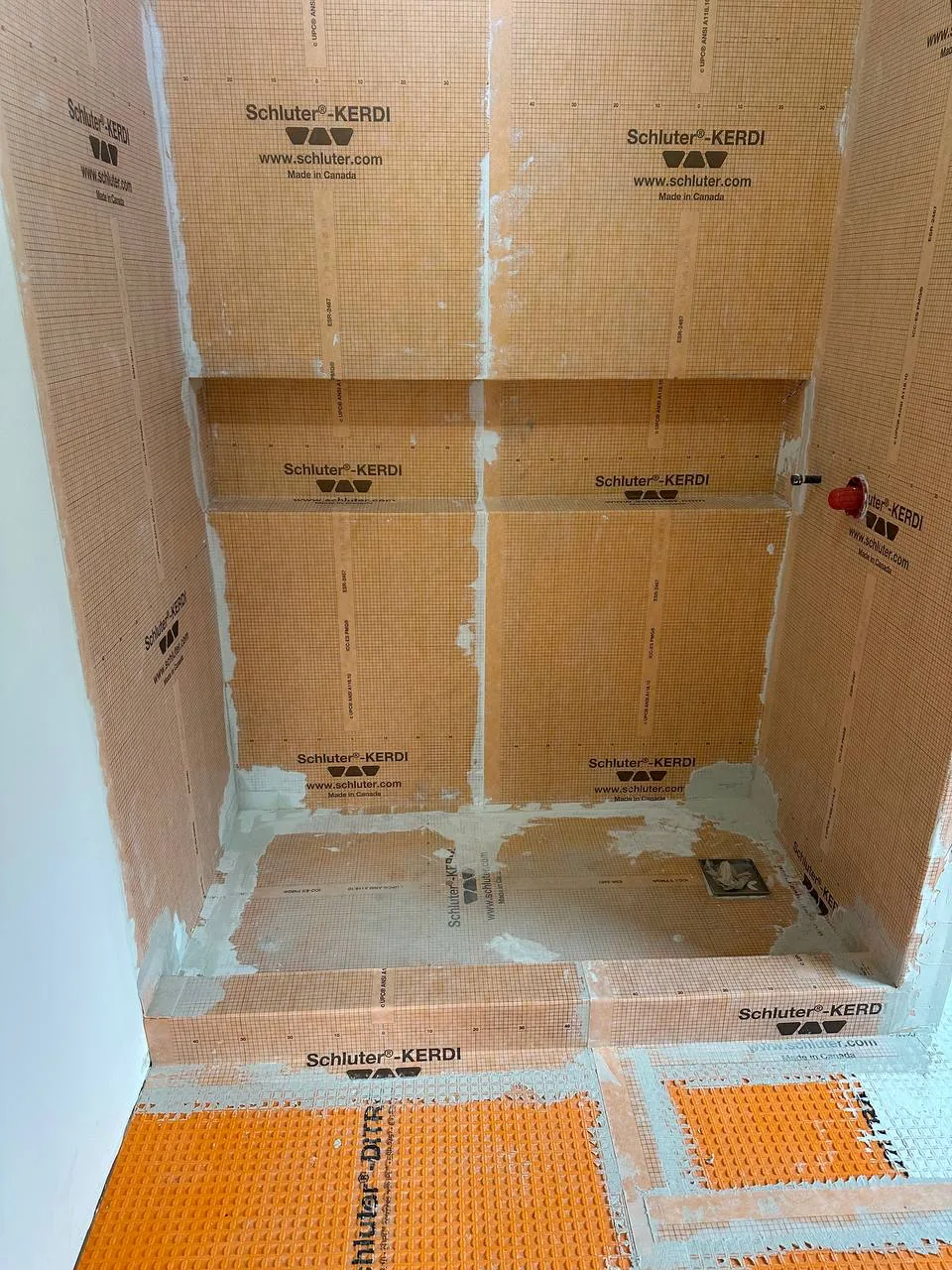
Walls and niche sealed as one surface, every seam banded -
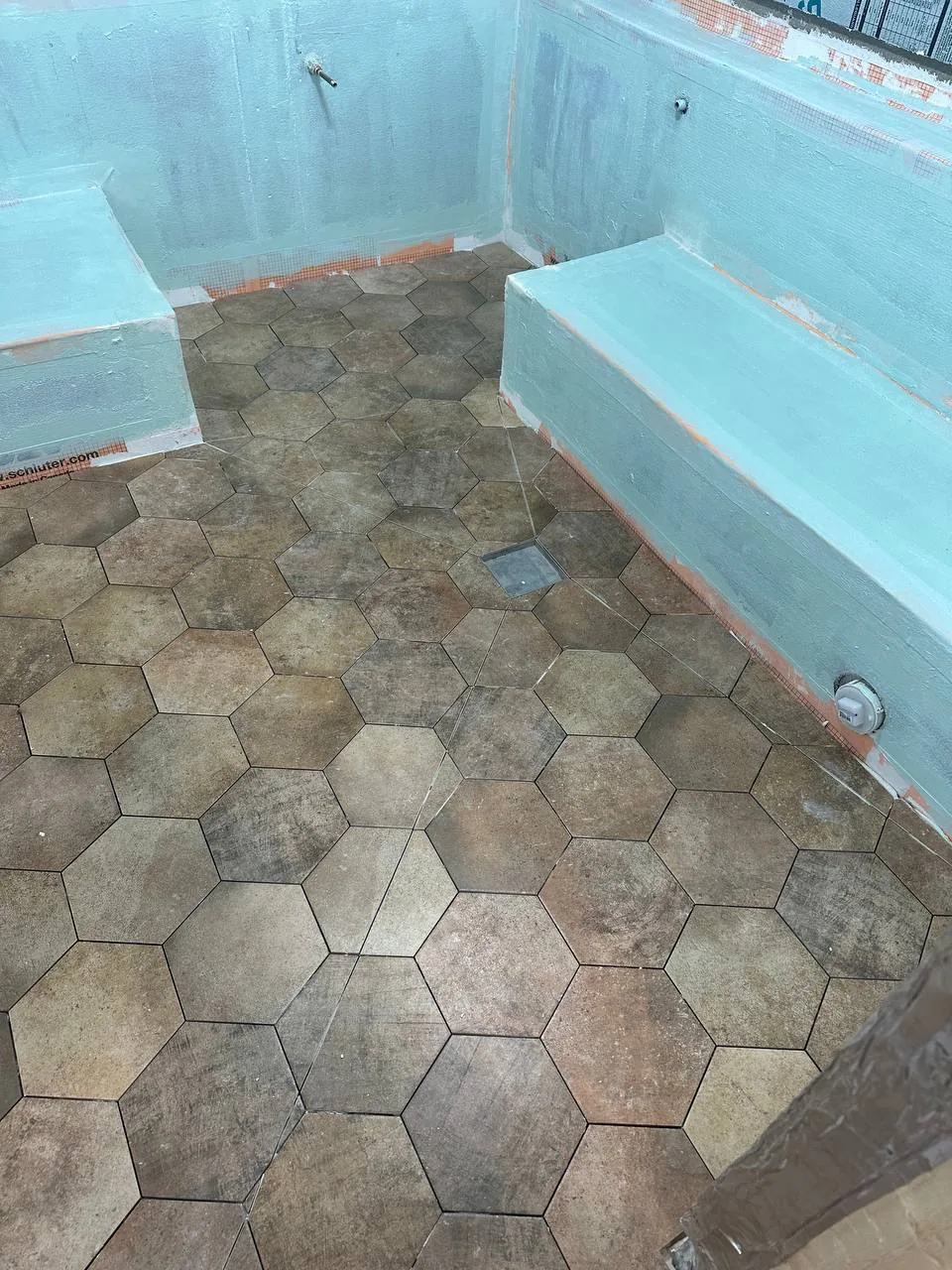
A liquid coat over the sheet membrane, worked into every corner
What it costs
What actually moves the number.
Anyone quoting this job without seeing these four things is guessing, and the guess gets corrected halfway through the work.
-
How much area is genuinely wet
A shower enclosure, a whole bathroom floor and a full wet room are three different amounts of membrane and, more importantly, three different amounts of detailing.
-
Number of penetrations and corners
The flat areas are quick. Each valve, each niche and each corner is a separate detail.
-
A niche or a bench
Both are holes or additions inside the wet envelope and both have to be waterproofed as part of it, with the slope built in so water leaves.
-
What is behind the old tile
If the existing substrate is soft, rotten or was never protected, it comes out. That is found on the first day of demolition and is priced and shown to you before it is covered.
Get a quote
Six short questions. A written price the same day.
No site visit to get a number, and no sales call afterwards. If the budget is not right, you will know from the reply instead of from an afternoon off work.
Rather just talk? (437) 875-1982 · English, русский, українська
- Liability insurance in place. Certificate on request.
- Written warranty on the workmanship, on request.
Questions
What people ask about this job.
Is waterproofing really necessary if the tile is sealed?
Yes. Sealer reduces staining on the grout surface; it does not stop water passing through. Grout is porous by design and every shower gets water behind the tile — the membrane is what decides where that water goes.
How do I know my old shower was waterproofed?
Usually you find out from the ceiling below, or from tile that sounds hollow and grout that stays dark for days. Once the room is open it is visible immediately, and you get photos of what is actually there.
Which membrane system do you use?
Sheet or liquid depending on the room — sheet membranes go in fast and give an even thickness, liquid suits complicated shapes. Both are installed as a full system with the manufacturer’s own corners, collars and drain, never mixed between brands.
Can waterproofing be added without removing the tile?
No. It goes behind the tile, so it means taking the surface off. Anything sold as a paint-on fix for an existing shower is buying time, not solving it.