Heated floor installation under tile, Etobicoke and Toronto.
Electric cable, mat systems and hydronic loops — installed while the floor is already open, which is the only moment it is cheap.
Send a few photos and the rough size — you get a written price the same day. No site visit, no sales call.
What's included
Everything in the quote, listed.
Written out so nothing appears as an extra later. If something on your job falls outside this, it is named in the quote — not discovered on the invoice.
- Choosing the system for the room — cable, mat or hydronic
- Subfloor prepared and, where required, insulation board underneath
- Cable or mat set out to a planned spacing across the heated area
- Resistance tested before, during and after installation
- Floor sensor placed between runs, in a conduit so it can be replaced
- Hydronic loops laid, clipped and pressure-tested before they are covered
- Self-levelling encapsulation or the tile set directly, depending on the system
- Thermostat position agreed and connection coordinated with a licensed electrician
How it is done
The parts of the job you will never see again.
Once the tile is down, every quote looks the same. This is what separates them while the floor is still open.
- 01
The layout is drawn before the cable is unrolled
Heating goes where people stand, and stops short of where it is wasted or not allowed — under the vanity, under the toilet flange, under a fixed bath. Spacing is kept even, because two runs too close together make a hot stripe you can feel through the tile.
- 02
Insulation under the cable, over a slab
On a basement slab, heat put in without an insulation board underneath goes down into the concrete. The board pays for itself in run cost and makes the floor warm up in a fraction of the time.
- 03
Resistance tested three times
Before installation, after it is fixed down and again after the tile is set. That is how a damaged cable gets found while it can still be fixed — a fault discovered after grouting means lifting the floor.
- 04
The sensor goes in a conduit
The floor sensor is the part most likely to fail, and it is buried. Running it in a conduit between two cable runs means it can be pulled out and replaced without touching the tile. It costs almost nothing to do and is skipped constantly.
- 05
Hydronic loops are pressure-tested and left under pressure
Loops are laid, clipped and brought up to pressure before anything covers them, then left pressurised while the floor goes down — if something pierces a loop, the gauge shows it the same day instead of a week after grouting.
- 06
No power until the tile has cured
The system stays off until the mortar and grout have cured fully. Heating a floor early drives moisture out too fast and weakens the bond.
From his jobs
-
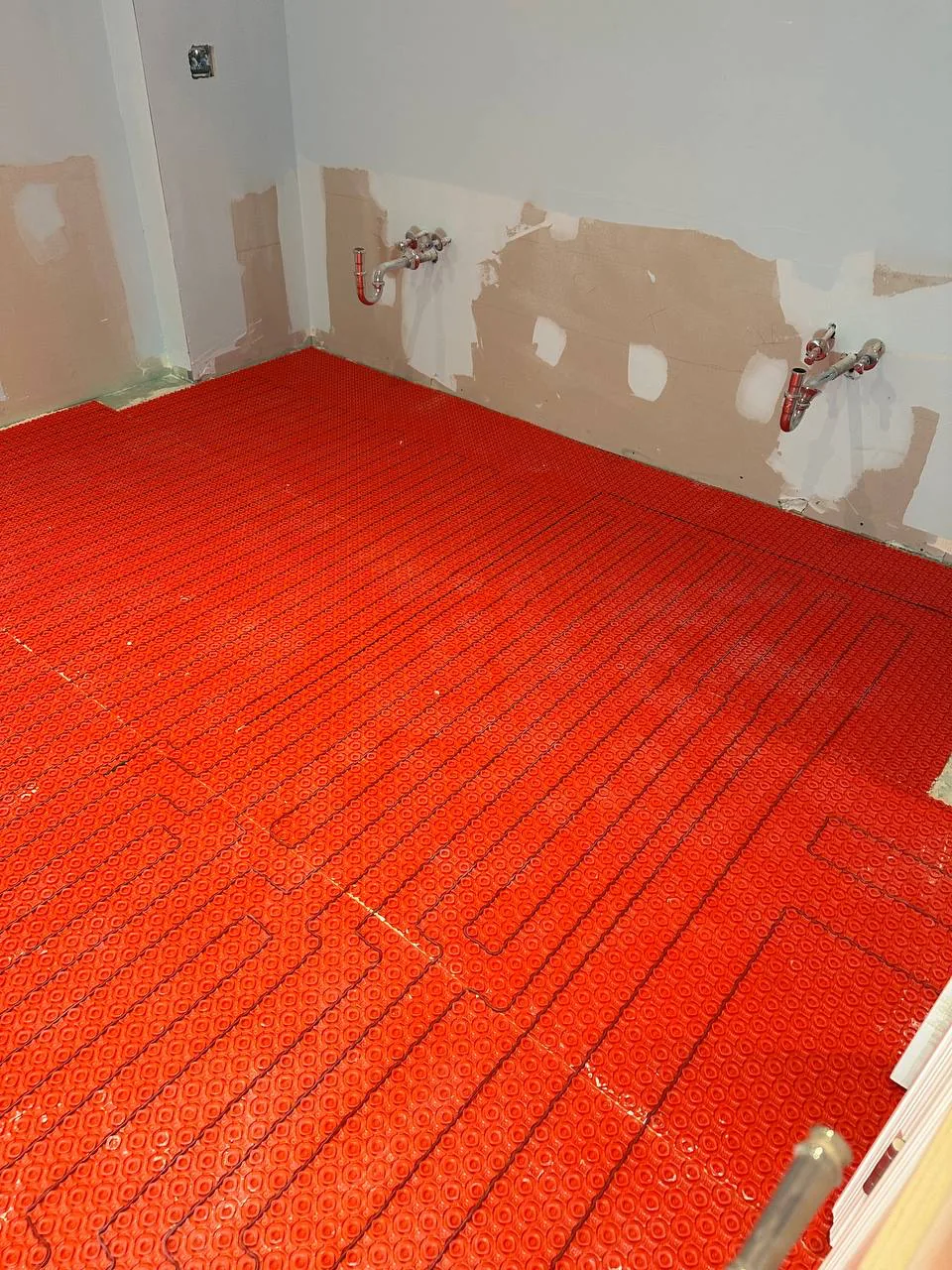
Cable run across the full floor, spacing kept even -
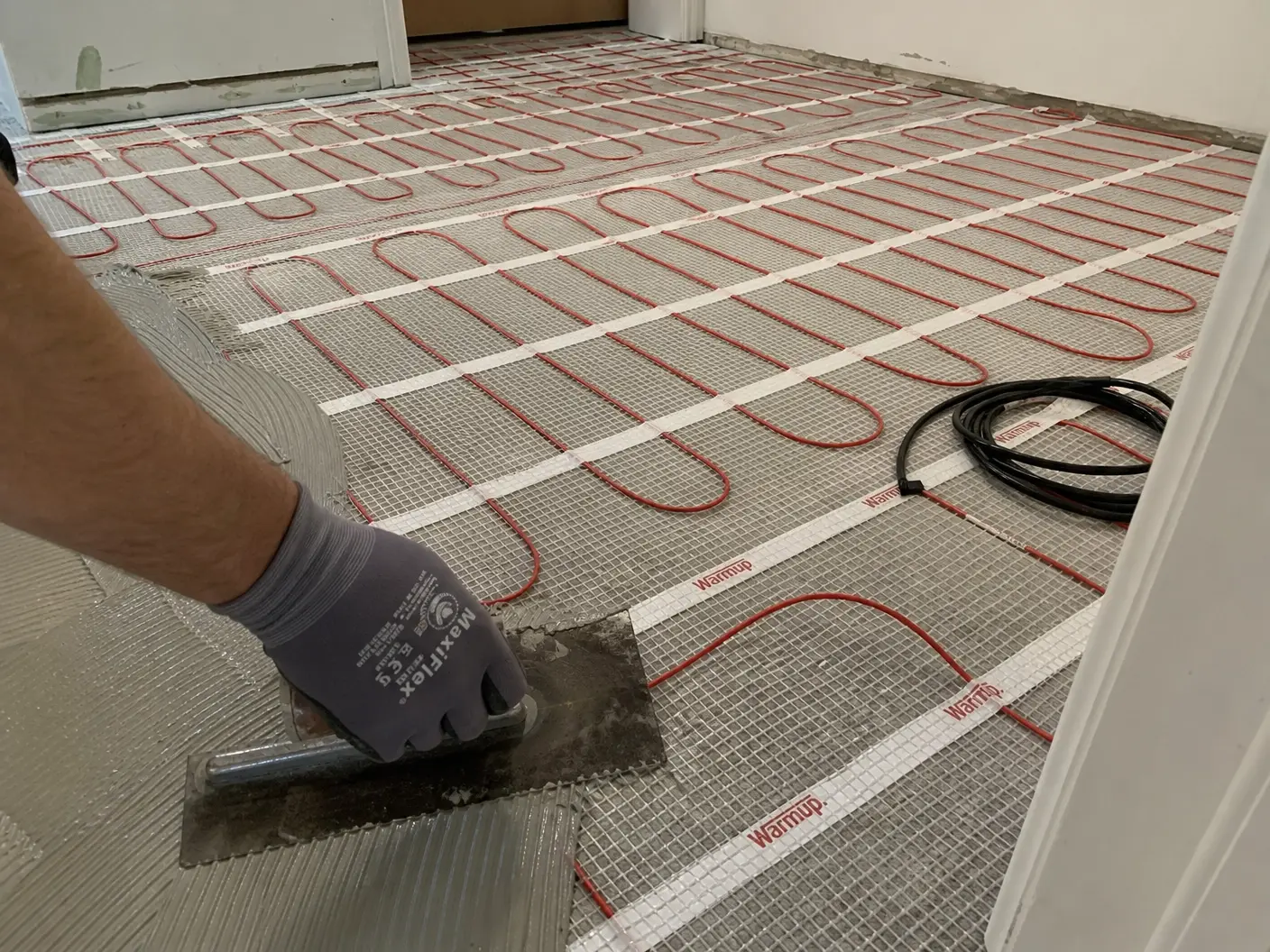
Mat system rolled out over the prepared subfloor -
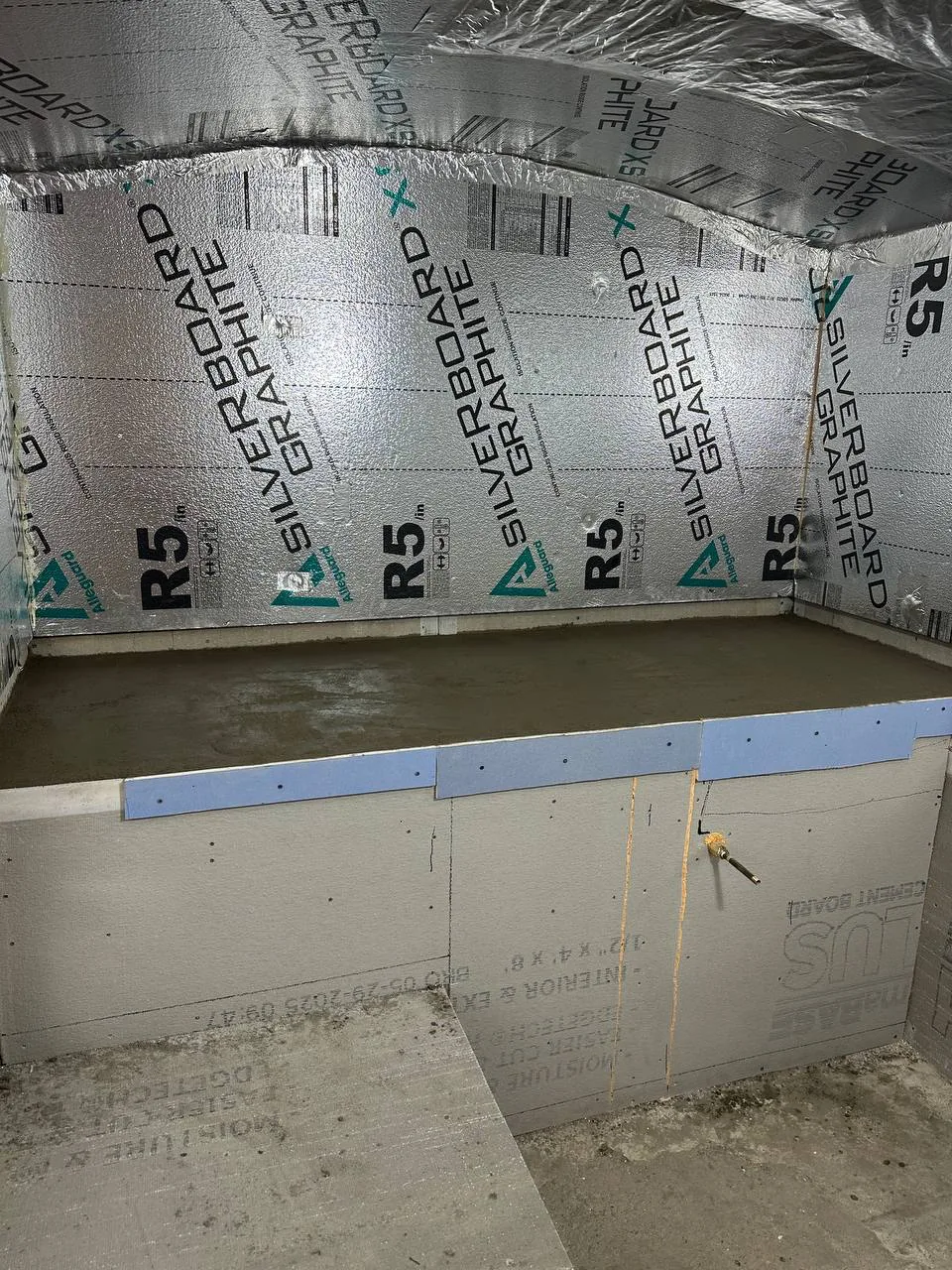
Insulation under the slab — heat put into bare ground is heat lost -
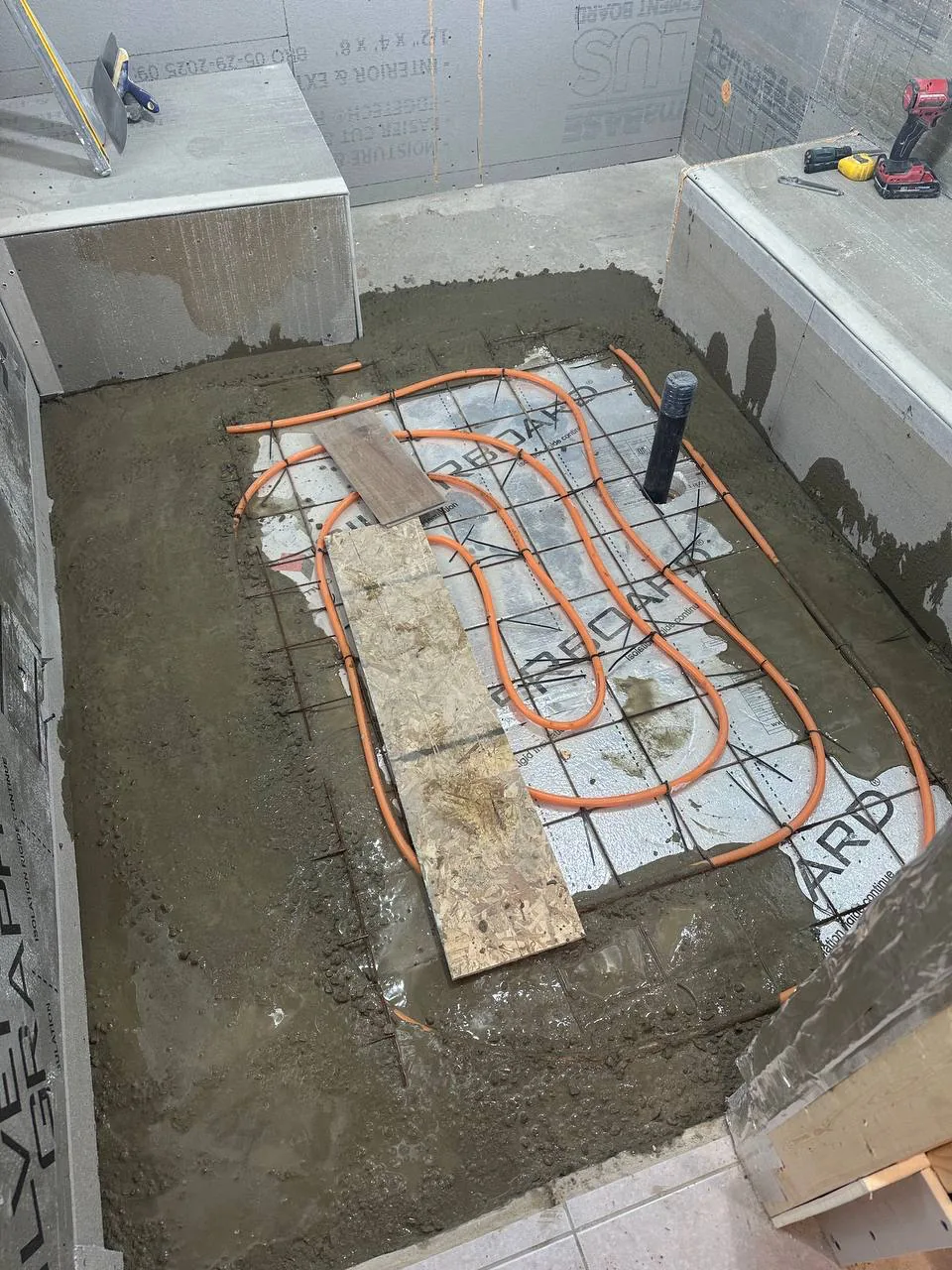
Water heating loops tied out across the whole floor before the pour
What it costs
What actually moves the number.
Anyone quoting this job without seeing these four things is guessing, and the guess gets corrected halfway through the work.
-
Cable, mat or hydronic
Mat is fastest over a simple rectangular floor. Loose cable costs less in material and takes longer to lay, but fits awkward rooms. Hydronic is a different scale of job, and belongs to a whole-floor or new-build context.
-
How much of the floor is actually heated
Heating is priced on heated area, not room area. A bathroom with a large vanity and a bath has far less heated floor than its size suggests.
-
Whether insulation board goes underneath
Over a slab it is strongly worth having, and it adds both material and a layer of labour.
-
Whether the floor is already open
Added during a tile job, the heating is close to material cost plus a day. Retrofitted into a finished floor, you are paying for the tear-out of a floor that was fine.
Get a quote
Six short questions. A written price the same day.
No site visit to get a number, and no sales call afterwards. If the budget is not right, you will know from the reply instead of from an afternoon off work.
Rather just talk? (437) 875-1982 · English, русский, українська
- Liability insurance in place. Certificate on request.
- Written warranty on the workmanship, on request.
Questions
What people ask about this job.
Can heated floors be added to an existing tile floor?
Not without lifting it. The heating sits under the tile, so retrofitting means removing the floor you have. That is why it is worth deciding while a floor is being replaced anyway — at that point it is a small addition to the job.
What does a heated floor cost to run?
Far less than people expect, because it runs on a thermostat and a timer, not around the clock, and it heats the surface you touch instead of the air. The exact figure depends on the heated area, your rate and your schedule.
Electric or hydronic — which one?
For a bathroom or a single room, electric, almost always: lower installation cost and no plant to house. Hydronic makes sense across a whole floor or a new build where the boiler and the manifold can be planned in.
Who connects it to the electrical panel?
A licensed electrician. He installs and tests the cable and sets the sensor, and the final connection is done by the trade legally allowed to do it, coordinated to the same schedule.